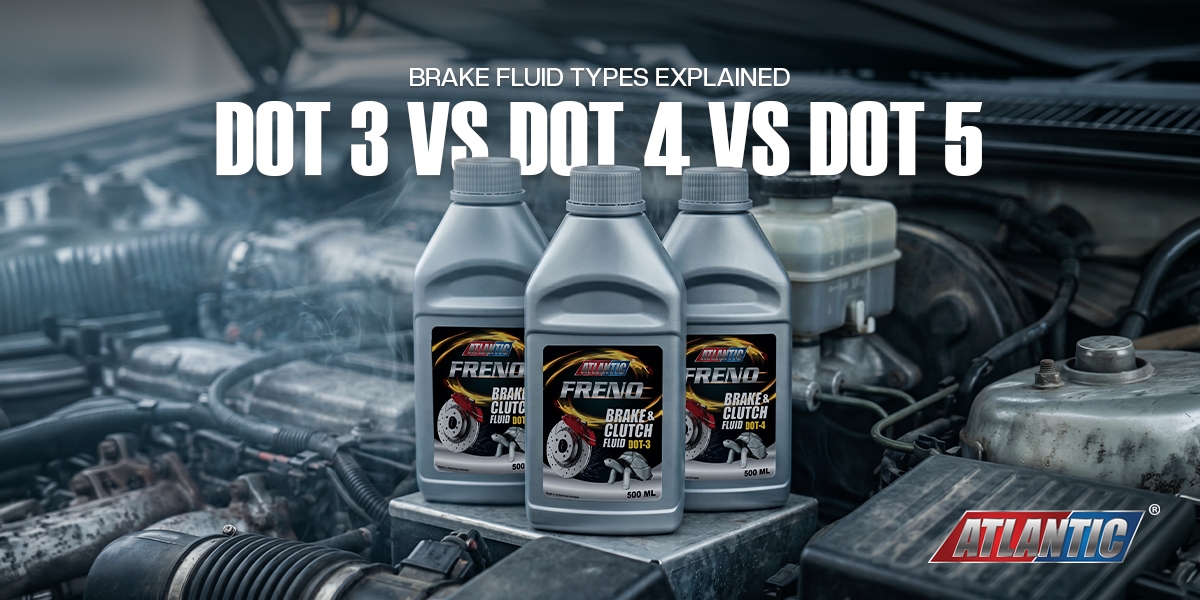
Brake Fluid Types Explained: DOT 3 vs DOT 4 vs DOT 5
The majority of drivers believe the brakes are functioning well until they feel something is wrong. It may be the congestion in the city, on the highway, or on the mountain road, but the safety of halting highly depends on one component that most individuals underestimate: brake fluid.
Brake fluids are not all the same, and the wrong type of fluid can influence the reaction of your car in an emergency. Whether on a daily commute or driving a professional vehicle, one should be aware of the distinctions between DOT 3, DOT 4, and DOT 5 brake fluids to ensure the right choice.
This guide will explain them in simple terms, how each works, and help you decide which one suits your car and driving conditions best, no matter where you may be on the planet.
What is Brake Fluid and Why It's Important
The brake fluid is one of the most significant yet least considered components of a vehicle. It is a hydraulic fluid that transmits the force from your foot on the brake pedal to each wheel's braking system. And your car would not simply stop.
When the brake pedal is pressed, the brake fluid compresses and forces its way through the brake lines, opening the callipers or wheel cylinders. This causes friction, slowing or halting the vehicle. The fluid must withstand severe conditions because the process is conducted under high pressure and temperature.
The brake fluid, however, can over time become wet, wear out, and become ineffective. This can lead to reduced braking performance or even a breakdown. This is why one needs to be aware of the type of brake fluid to stay safe no matter where they are in the world.
Why Choosing the Right Brake Fluid Matters
Brake fluids are non-homogeneous. The improper selection of the type may adversely affect braking performance, damage components, or decrease system efficiency.
Various vehicles are designed to operate with specific types of brake fluid. The factors are also influenced by driving conditions, climate, and vehicle use. One such scenario is driving in hot weather or mountainous locations, where the car faces increased heat and thus needs brake fluids that perform better.
Braking is predictable with the help of the right brake fluid; inner components are also protected, and the entire system functions under any conditions. The appropriate fluid will help you in a traffic jam within a city, on a long highway or even during extreme weather conditions.
Understanding DOT Ratings in Brake Fluids
The Department of Transportation (DOT) categorizes brake fluids based on their performance properties, particularly boiling points. Such ratings include DOT 3, DOT 4, DOT 5, and DOT 5.1, which indicate how the fluid reacts to heat and moisture.
Two terms to know are dry boiling point and wet boiling point. The dry boiling point is the boiling point of fresh fluid with no moisture content, whereas the wet boiling point is the boiling point of fluid that has, over time, absorbed water. The boiling point at which water is wet is especially important for long-term performance, as most brake fluids are hygroscopic (moisture-absorbing).
Every DOT rating has some characteristics that make it suitable for many types of vehicles and conditions in which they are used.
DOT 3 Brake Fluid
One of the most widely used brake fluids worldwide is DOT 3. It is a glycol-based and very common in standard passenger cars. It has a medium boiling point, hence it can be used in regular driving situations. However, it is also prone to moisture absorption, which can degrade its utility over time.
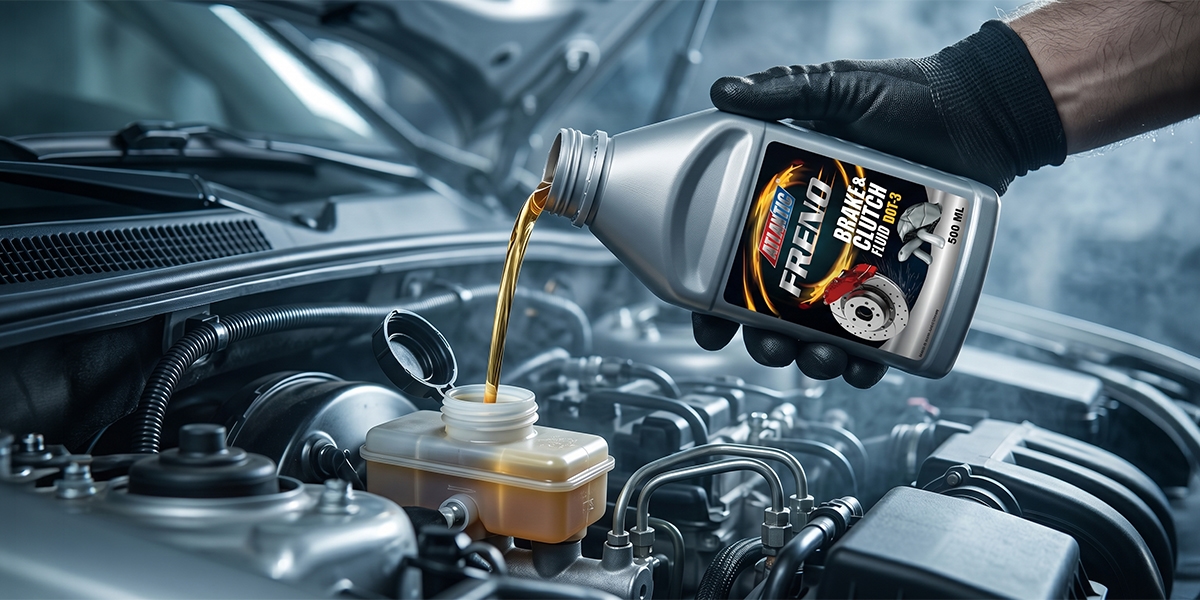
DOT 3 is typically recommended for aged automobiles or those that do not require intense braking, which is laborious. As good as it is in normal conditions, it may not be appropriate in high-performance driving and extreme conditions. You can give Atlantic Freno Brake Fluid DOT 3 a try, which is designed for a wide range of brake and clutch applications.
DOT 4 Brake Fluid
DOT 4 is also glycol-based, but it has a higher boiling point than DOT 3. This renders it more compatible with more recent cars and strenuous driving.
It is also widely used in cars with advanced braking systems, such as those with ABS (Anti-lock Braking Systems). DOT 4 is more heat-resistant and, therefore, a good option for drivers in hot weather or in congested traffic.
Even though it remains moisture-absorbent, its enhanced performance features make it more stable in the long run than DOT 3. You can give Atlantic Freno Brake Fluid DOT 4 a try, which is recommended for passenger cars, 4WDs, motorcycles, light- and heavy-duty commercial vehicles, and agricultural equipment.
DOT 5 Brake Fluid
DOT 5 brake fluid is very different from DOT 3 and DOT 4. It is not absorbent and consists of silicone. This makes it extremely corrosion-resistant and suitable for long-term storage or special purposes.
However, DOT 5 cannot be used with glycol-based fluids such as DOT 3 and DOT 4. It is generally used on military cars, vintage automobiles, or cars stored for extended periods.
Though it offers excellent moisture resistance, it has not been widely used in standard passenger cars due to compatibility and performance issues.
DOT 5.1 Brake Fluid
DOT 5.1 has a misconception due to its name. It is glycol-based rather than DOT 5 and can be used with the DOT 3 and DOT 4 systems.
It has extremely high boiling points, hence suitable for high-performance cars and extreme driving conditions. DOT 5.1 is designed to deliver excellent braking performance in high-heat environments without compromising compatibility with contemporary braking systems.
DOT 5.1 is an excellent option for drivers who need high performance but do not want to switch to silicone-based fluids. To use a fully synthetic brake fluid, give Atlantic Freno Brake Fluid DOT 5.1 a try.
DOT 3 vs DOT 4 vs DOT 5 – Key Differences
The simplified comparison is given below so that you can get an idea of the main differences between these types of brake fluid:
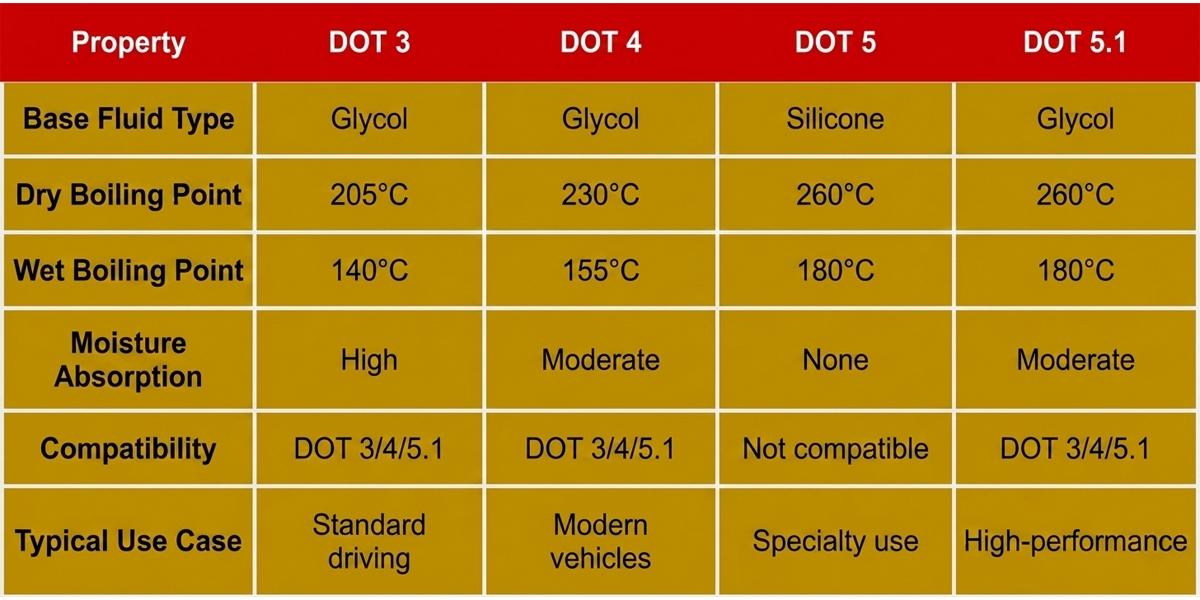
This comparison highlights the intentions of each fluid, as they vary depending on the vehicles' needs and the circumstances under which they are driven.
Which Brake Fluid Should You Choose?
The right brake fluid depends on your car's specifications and how you use it. You can never be sure when you go against your vehicle manufacturer's advice.
DOT 4 is a stable and usually suitable option in most modern automobiles. It is better in heat resistance than DOT 3 and is suitable for use with an advanced braking system. If you drive in hot climates or heavy traffic conditions, DOT 4 or DOT 5.1 may offer better performance.
DOT 3 is still applicable for older cars or light driving. In the meantime, DOT 5 should be used in specific applications, such as classic cars or special vehicles.
Since you are not aware of the type of brake fluid you need, it might be easier to consult a trusted supplier. Atlantic Grease and Lubricants offers a comprehensive range of high-quality brake fluids that meet world standards and suit various vehicle needs. They are experts in delivering the right product to you.
How Often Should Brake Fluid Be Replaced?
Brake fluid is not permanent. Most types absorb moisture over time, and therefore their performance deteriorates.
The brake fluid is to be replaced after 1 to 2 years (as a rule). This will, however, vary depending on the drive conditions, weather, and the vehicle's usage. Fluid may degrade further during wet weather or temperature fluctuations.
There is a need to check frequently. If the fluid is dark or dirty, or if you feel the braking is not performing well, replace it. Your system will provide stable performance and security by keeping brake fluid fresh.
Take Control of Your Braking Performance
Its braking system is as fine as the fluid in it. Selecting the right brake fluid ensures consistent performance, the safety of your car, and safe driving on the road.
In case you need some reliable and high-quality brake fluids, explore the range at Atlantic Grease and Lubricants. Our products are designed to meet the international standards and deliver quality performance, depending on your needs, either DOT 3 or DOT 4, or some advanced functions such as DOT 5.1.
Get in touch today or browse their collection to find the right brake fluid for your vehicle.