Best Engine Oil for Cars, SUVs, and Trucks: 5 Smart Tips Before You Buy
Selecting the best engine oil is one such choice that seems easy until you stand in front of a shelf full of products or browse product pages with unfamiliar labels. Synthetic, mineral, 5W-30, 10W-40, diesel-compatible, high-mileage, it may get confusing fast. The thing is, though, the type of oil you use directly affects your engine's smoothness, its ability to handle heat, and even how long it lasts.
Daily commuters, SUV drivers, hard-working truckers; no matter what car you drive, the right oil is more important than many drivers think. High-quality engine oil will minimize friction, protect moving parts, enhance fuel economy, and keep the engine clean in the long run. The wrong one, on the other hand, may result in poor performance, additional wear, and unnecessary maintenance costs.
In this guide, we have divided it into five real-life tips to help make the decision about engine oil much easier. And if you are looking for a trustworthy place to shop, Atlantic Grease and Lubricants is a reliable supplier of engine oils for cars, SUVs, and trucks.
Why Engine Oil Choice Matters More Than You Think
Engine oil does more than just “lubricate the engine.” It helps cool engine parts, reduces metal-to-metal contact, prevents sludge formation, and improves overall performance. Correct oil use in modern vehicles can be felt in responsiveness, smooth operation, and long-term protection.
This is why it is not always a good idea to purchase the cheapest available or take the first bottle that you see. The idea is to find the perfect match for your engine, climate, and driving style.
1. Start with Your Vehicle Manufacturer’s Recommendation
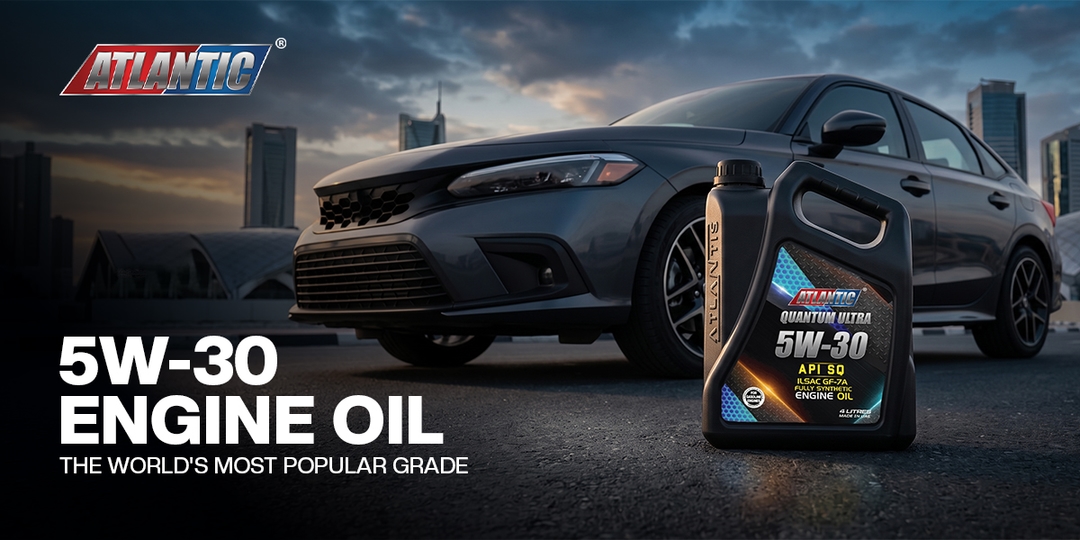
The first step, and the most crucial one, is to check your owner's manual. Each vehicle is designed with its engine oil needs in mind, including the viscosity grade and oil type. You should not start with guesswork; you should start with what your manual suggests as 5W-30 full synthetic. If you are looking for a 5W-30 fully synthetic engine oil for your vehicle, you can try our Atlantic Neoteric Ultra Synthech Engine Oil SAE 5W-30 API SP.
This is important because the engines are built to tight tolerances, and the wrong oil may affect performance and lubrication. The cars, SUVs, and trucks could all consume various grades of oil based on engine size, turbocharging, mileage, and working conditions. By following the manufacturer's recommendation, you have an accurate starting point and help preserve warranty coverage (where applicable).
And if you do not know what your vehicle requires, a supplier such as Atlantic Grease and Lubricants can also assist. Shopping at a specialized source will allow for more readily finding engine oils that match actual vehicle needs, rather than generic one-size-fits-all recommendations.
2. Understand Synthetic vs Mineral Oil Before You Buy
Mineral oil is not inherently “old‑fashioned”; it is simply less refined. Some heavy‑duty diesel engines historically used mineral oils due to additive compatibility, but modern diesel engines overwhelmingly require synthetic or semi‑synthetic oils. Synthetic oil, on the other hand, is optimized towards higher performance. It generally provides higher heat resistance, greater low-temperature flow, cleaner operation, and longer-lasting protection.
Most modern engines are designed with synthetic‑compatible tolerances and benefit from synthetic oil. Synthetic oils have a higher viscosity index, meaning they maintain viscosity more consistently across temperature changes. That being said, the correct option will be determined by your engine's purpose rather than what sounds premium.
3. Pay Attention to Engine Oil Viscosity
The engine oil viscosity rating on the bottle is 5W-30 or 10W-40, and you are wondering what it means. Simply stated, viscosity is the ability, or rather the thickness or thinness of the oil, and how it flows at varying temperatures.
The first number, followed by the “W,” relates to cold-weather performance. The second figure shows the oil's performance at high engine temperature. Smaller numbers tend to run more easily during cold starts, whereas larger numbers can offer thicker protection at higher operating temperatures.
Selecting the right viscosity is essential, as it influences startup protection, lubrication speed, and load performance. A truck operating in hot conditions might have different needs than a small city car that travels a short distance every day. An incorrect viscosity may reduce protection or cause the engine to work harder than necessary. That is why it can be a good idea to shop at a well-informed retailer such as Atlantic Grease and Lubricants, whose product line is designed based on real usage requirements.
Also Read: ATF vs CVT vs DCT Fluids: Understanding Modern Transmission Fluids
4. Match the Oil to How You Actually Drive
Many drivers base their decisions solely on the type of vehicle when taking oil, although driving style is also important. The same engine oil that is suitable for a highway commuter might not be suitable for a delivery vehicle, a family SUV, or a truck moving heavy cargo.
When you do short trips most of the time, your engine may not always have time to reach full operating temperature, which can increase moisture and deposits over time. If you commute long distances, you will want oil that holds up well during long heat cycles. If you have an SUV or truck that frequently tows, climbs, or carries weight, then higher thermal stability is even more important.
This is also where other factors, such as fuel efficiency, come into play. The correct oil can reduce internal friction and improve engine smoothness, potentially benefiting long-term fuel economy. Engine oil is not a magic bullet for gas mileage, but it definitely contributes to the overall efficiency and engine responsiveness.
5. Choose a Trusted Supplier, Not Just a Random Brand Listing
Engine oil sellers are not rare, but not all offer the same level of assurance. Authenticity of the product, storage quality, variety of the product, and product compatibility advice all come into play, particularly when making purchases online or when purchasing oil for various types of vehicles.

This is why having an expert as a buyer of engine oil is reasonable, rather than treating engine oil as a generic product. Atlantic Grease and Lubricants can be a good choice for drivers, workshops, and fleet buyers who want reliable access to engine oils for cars, SUVs, and trucks. A trusted source will make the buying process more transparent and convincing, rather than making the purchase look like a gamble.
A good supplier also facilitates easier comparison of alternatives based on their viscosity, formulation, and application. It saves time and helps to eliminate the possibility of selecting the wrong oil. At the time you are investing in engine protection, you should shop at the right place as part of the right decision.
A Practical Way to Narrow Down the Best Engine Oil
To have a quick and easy way to choose engine oil, follow this sequence: first, refer to your owner's manual; then, ensure you have the right viscosity; and finally, based on your engine and driving environment, choose between synthetic and mineral oil. Then purchase from a trusted source that knows automotive lubrication, not one that only lists items without context.
This is the case regardless of whether you are driving a sedan, crossover, full-size SUV, or a heavy-duty truck. It is not about going after the most expensive bottle on the shelf. It is to select the oil that best fits your vehicle's needs and offers the best protection, performance, and value.
Where to Buy the Best Engine Oils?
It does not have to be complex to pick the best engine oil. When you know what your manufacturer suggests, the basics between synthetic and mineral, and the significance of engine oil viscosity, the choice is a lot more feasible. The appropriate oil assists in protecting your engine, aids in smoother running, and could even enhance your fuel economy during normal driving.
If you are ready to buy with confidence, visit Atlantic Grease and Lubricants. It is a reliable destination to buy quality car, SUV, and truck engine oils, whether you need a regular replacement or a superior product to meet the requirements for demanding driving conditions. Select the right oil today and give your engine the protection it deserves.