How to Read an Engine Oil Label: A Complete Guide to Understanding What's in the Bottle
It may seem easy when you have to pick engine oil until you find yourself on a shelf with dozens of bottles all saying to provide better protection, higher performance, and longer life for your engine. The fact is that all the data printed on an engine oil label tells you whether this product is recommended for your car. Knowing these labels will help you avoid an expensive mistake, keep your car running better, and ensure it gets the protection it was designed to get.
Most drivers consider the brand name or price when buying oil, but the most important information is usually in the specifications, certifications, and performance ratings printed on the bottle. After learning how to use this information, you can be certain to choose the correct lubricant to use in your engine and driving conditions.
Why Engine Oil Labels Matter
An engine oil label is much more than marketing text. It is a technical manual that describes the oil's performance, its compliance with standards, and the types of vehicles it is designed to protect. Modern engines are designed to a high level of precision and better emissions equipment, so the choice of oil is now more significant than ever.
Wrong oil choices can lead to increased wear, reduced fuel economy, poor cold-start performance, and even warranty claims. After vehicle owners can understand the data on the label, they are in a position to make well-informed choices that will ultimately lead to engine protection and reliability.
Understanding Engine Oil Viscosity Grades
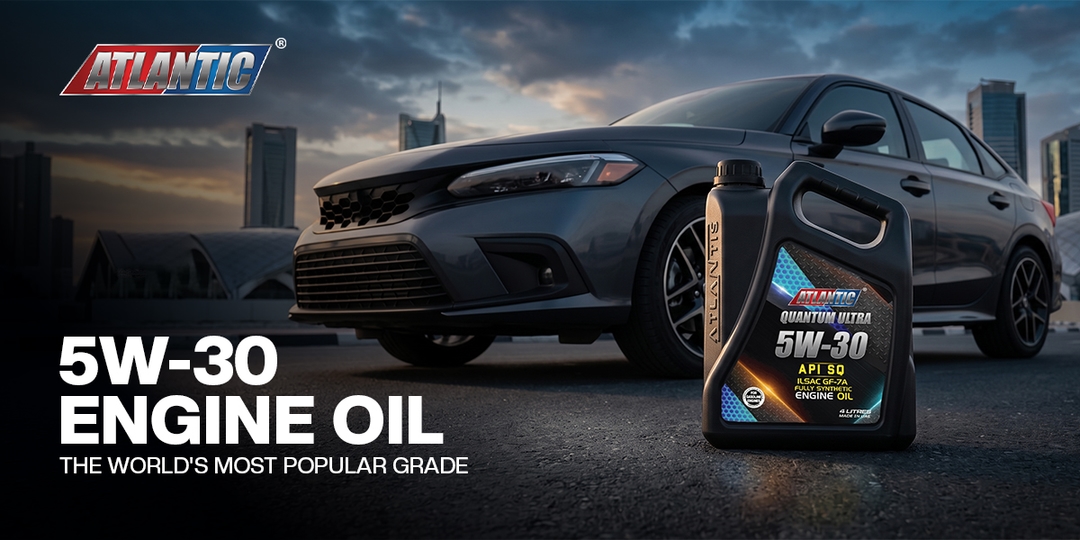
The very first thing you will see on any oil bottle is a viscosity grade such as 5W-30, 10W-40, or 0W-20. This number indicates the oil's flow characteristics at different temperatures and is one of the most important factors in oil selection.
The first number followed by the letter "W" refers to winter performance. The lower the number, the easier the oil flows during cold starts. For example, a 0W oil tends to provide better circulation at low temperatures than a 10W oil.
The second figure shows the oil’s viscosity at normal operating temperature. A higher amount tends to yield a more substantial protective film at high temperatures. The appropriate viscosity grade is determined by the automobile manufacturer and should always be as specified in the owner's manual.
Knowledge of engine oil viscosity can be used to maintain appropriate lubrication across different temperatures, minimize wear during start-up, and provide protection under load.
Decoding API Certification
The next important component that is on engine oil labels is the API certification. This is the American Petroleum Institute (API), which defines the performance criteria for motor oils.
The majority of modern gasoline engine oils have API classifications that include the letter "S," and diesel engine oils have classifications that include the letter "C," with newer ones like API SP (latest gasoline category) and API CK‑4/FA‑4 (latest diesel categories) replacing older ones to reflect advances in engine technology and emissions standards.
The API certification mark indicates that the oil has undergone testing and meets the established performance standards. This will provide consumers with confidence that the product can provide the type of protection advertised by the manufacturer.
When comparing products, it is always important to ensure the API category is the same or higher than the one your car manufacturer recommends.
What ACEA Ratings Tell You
Many engine oils also display ACEA specifications. The European Automobile Manufacturers Association (ACEA) develops performance standards widely used by European vehicle manufacturers.
ACEA ratings provide more details on fuel economy, emissions system compatibility, high-performance operation, and draining interval. Labels can show the classifications ACEA A3/B4, C3 or C5, each designed to fit the specific requirements of the engine type and its operation. In 2021, ACEA introduced a major revision to its Light‑Duty Oil Sequences, replacing older A/B and C categories with updated test methods, new engine tests, and stricter requirements for modern emissions‑controlled engines.
For vehicles manufactured by European brands, ACEA specifications can be as significant as viscosity grades and API certifications.
Understanding OEM Specifications
Modern vehicle engines often require engine oils that meet certain Original Equipment Manufacturer (OEM) standards. The automakers develop these standards to meet the unique needs of their engines.
Standards may include Mercedes-Benz MB 229.51, BMW Long-life requirements, Volkswagen VW 504 00/507 00, manufacturer approvals, and more. These OEM specifications mean the oil has been tested against the specifications set by the vehicle maker.
When your owner manual lists a particular OEM approval, choose an oil that matches or is officially approved to that specification. This will assist with compatibility with engine parts, turbochargers, and the emissions system, as well as a long service life.
Synthetic, Semi-Synthetic, and Mineral Oils Explained
The base oil technology used in the formulation is also indicated on the engine oil labels. The terms fully synthetic, semi-synthetic, and mineral oil reflect various levels of refinement and performance.Full synthetic oil is designed with high resistance to oxidation, thermal, and wear. It tends to be more effective in extreme temperatures and has longer drain intervals. If you are looking for a premium fully synthetic oil of 0W-30 grade, you can use our Atlantic Synthech Ultra Power SAE 0W-30 API SN ACEA C3.

Semi-synthetic oil is a blend of mineral and synthetic base oils that provides better performance at a lower cost.
Mineral oil is refined directly from crude oil and is generally used in older cars or in applications that are not very demanding in terms of performance.
Knowledge of these differences will enable consumers to balance their performance needs, maintenance intervals, and budget considerations.
Looking Beyond the Front Label
While the important information is indicated on the front of the bottle, extra information is usually provided on the back label or technical data sheets. These materials are useful in offering insight into the performance characteristics of the oil.
Other data like flash point, pour point, viscosity index, sulfated ash levels, and Total Base Number (TBN) can be used to determine the performance capabilities of an oil in a particular operating environment.
Casual vehicle drivers might not have to analyze every specification, but being aware that these values are present can help differentiate between true performance claims from simple marketing language.
The Importance of Fuel Economy and Emissions Compatibility
Most of the modern engine oils are specially formulated to support fuel efficiency and protect emissions-control equipment. The labels can include low-SAPS technology, catalyst compatibility, or fuel-saving performance.
These features are especially significant with those vehicles that have diesel particulate filters (DPFs), gasoline particulate filters (GPFs), and advanced catalytic convertors. Using an oil designed for these systems helps maintain emissions compliance while supporting engine longevity.
With the increase in regulations, these performance features are finding their way onto oil packaging.
How to Verify Oil Label Claims
There are many products in the market and consumers ought to be cautious of label claims. The reputable manufacturers have good certifications, approvals, and technical documentations supporting their products.
Search official API certification marks, ACEA classifications and OEM approvals. In addition, numerous manufacturers post product data sheets and approval documents on their websites. These materials enable consumers to confirm that the oil genuinely meets the specifications displayed on the label.
A credible label means that it gives clear information as opposed to using promotional words all the time.
Making the Right Choice for Your Vehicle
Once you get the idea of the most important aspects, which are the viscosity grade, the certification API, the ACEA standards, the OEM specifications and the type of oil, reading an engine oil label becomes a lot easier. Collectively, these will give a full story of how the product will perform and whether it is suitable for your engine or not.
Oil may not be as expensive as it might appear to be the best. Oil is that which fits the needs of your vehicle manufacturer and offers the kind of protection you need based on the conditions you have to drive in. A few minutes to learn the label can lead to a longer engine life and a higher efficiency and lower maintenance over time.
Where to Buy Genuine Engine Oil?
When you are in need of buying quality lubricants that meet the modern standards of performance, think of Atlantic Grease and Lubricants. With a comprehensive range of engine oils formulated for passenger cars, commercial vehicles, and industrial applications, Atlantic provides reliable solutions backed by industry-recognized specifications and performance standards.