5W-30 Engine Oil: The World's Most Popular Grade - Is It Right for Your Engine?
An afternoon in the UAE can make the roads a lot hotter than most road users feel in other regions. Include traffic congestion, air conditioning, dusty roads and lengthy motorway travels, and your engine oil has a significant task to attend to.
That is why most UAE car owners think that the thickest available oil should offer the best protection. Nevertheless, contemporary engines are designed with specific oil flow needs, and employing a heavier grade than the manufacturer recommends may create more issues than it resolves.
5W-30 engine oil is also one of the most recommended engine oil viscosity grades in the world. It is used in ordinary passenger cars and family SUVs, as well as turbocharged cars and light commercial fleets. It is popular for its start-up flow, operating temperature protection, fuel efficiency, and compatibility with modern engine technology.
However, is 5W-30 the most suitable grade of engine oil for your vehicle? It depends on your engine design, manufacturer specifications, driving conditions, and maintenance schedule.
What Does 5W-30 Engine Oil Mean?
The figures in 5W-30 represent the oil's behavior at various temperatures.
The first figure, and the letter W, shows the viscosity of the oil at a cold start. The “W” refers to winter performance. An oil that has a 5W rating is sufficiently free to flow rapidly through the engine when started.
The 30 indicates the viscosity of the oil when the engine has attained normal operating temperature. At that point, the oil should have a protective film among the moving parts and at the same time, be fluid enough to circulate effectively.
This balance is significant, as engine wear may occur when oil fails to reach critical parts quickly or when the lubricant becomes so thin that it fails to provide protection. A proper viscosity enables oil to flow through small openings, lubricate bearings, minimize friction, cool internal parts, and transport contaminants to the oil filter.
Thicker oil does not necessarily mean better oil. When an engine is engineered to use 5W-30, a heavier grade of oil can slow circulation, creating resistance and disrupting the operation of other systems that rely on controlled oil pressure.
Why is 5W-30 the World’s Most Popular Engine Oil Grade?
5W-30 has become a powerful international engine oil grade because it is compatible with a wide operating range. It provides excellent cold-start flow and has SAE 30 viscosity at usual engine temperature.
Newer engines have smaller internal tolerances than older ones. Oil should be able to flow through small channels and reach parts in a short time. The nature of 5W-30 flow makes it suitable for these designs.
The grade can also help minimize internal resistance compared to heavier oils. Reduced resistance enables the engine to work more effectively, which could contribute to improved fuel consumption and reduced emissions.
Company Vehicle manufacturers usually recommend using 5W-30 for all engines sold in various regions. A model of car in the European market, Asia, and the Middle East can share the same basic engine design, but the approved oil specification may be different. fact that it is very popular all over the world does not imply that all 5W-30 products are the same. Oils of the same viscosity grade can be based on different base oils, additive packages, and industry specifications. The right option should meet the viscosity requirement and the performance standard indicated in the vehicle manual.
Is 5W-30 Suitable for the UAE Climate?
In selecting engine oil for the UAE climate, drivers usually consider only the outside temperature. The Ambient heat is important, though not the only determinant of oil choice.An effective engine cooling system maintains internal temperatures within the designed operating range. When the vehicle is being driven in Dubai, Abu Dhabi, Sharjah, or in a colder country, the engine still relies on the oil viscosity as defined by its manufacturer.
The conditions in the UAE, however, can place greater strain on the lubricant. Oxidation and contamination can be hastened by high ambient temperatures, idling, stop-and-go traffic, sand, dust and frequent short trips.
A good synthetic 5W-30 would be quite appropriate in these conditions, where the car manufacturer suggests it. Compared to traditional mineral oils, synthetic formulations tend to be more resistant to heat, oxidation, sludge formation and viscosity breakdown.
Drivers are also expected to determine whether their usage is severe. Commercial driving, towing, delivery work, off-road work, or idle time may require shorter oil-change intervals.
Which Vehicles Use 5W-30 Engine Oil?
Applications of 5W-30 in passenger cars, SUVs, crossovers, pickup trucks, vans and light commercial vehicles are quite diverse.
It is usual in vehicles from American, European, Japanese, and Korean manufacturers. This grade may be necessary in both naturally aspirated and turbocharged engines.
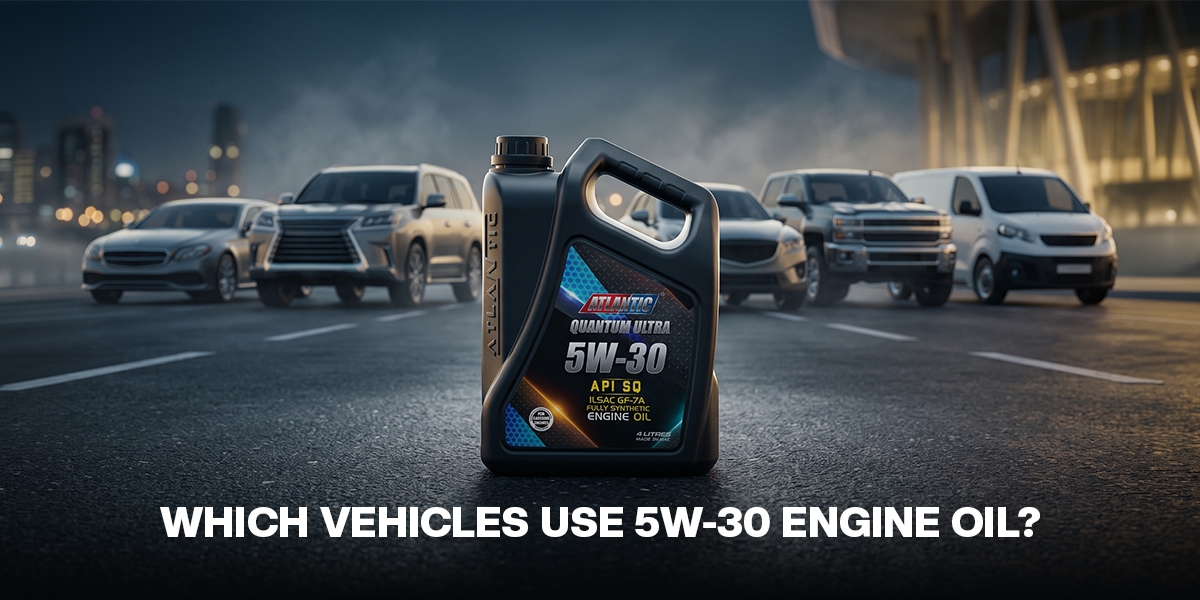
The age of the vehicle is not the only factor to know whether 5W-30 is appropriate. It is used in some older vehicles, and in some new vehicles, it is used with thinner grades like 0W-20. Other engines might need a viscosity of 5W-40 or a different viscosity due to the design and operating specifications.
Before choosing oil, it should always be looked at in the owner's manual. It will typically determine the suggested viscosity and demanded standards, e.g., an API, ACEA, or manufacturer-approved standard.
It is not sufficient to match the label with the 5W-30. The oil that suits a single European diesel engine can fail to satisfy the needs of an American petrol engine, although they are of the same viscosity grade.
Can 5W-30 Be Used in Petrol and Diesel Engines?
5W-30 can be used in petrol and diesel engines; however, the formulation should have the appropriate approvals.
Petrol engines can be subject to requirements that manage deposits, prevent low-speed pre-ignition, and protect timing chains. Turbocharged petrol motors can be particularly sensitive to the quality of oil.
Diesel engines do not have the same requirements. The oil might be required to deal with soot regulation, deposits and protect emissions equipment. This is the case with diesel vehicles that have diesel particulate filters, which usually demand low-SAPS oil with regulated quantities of sulfated ash, phosphorus and sulfur.
It is not necessary to use a product because it has petrol and diesel on the label. The precise specification should be in accordance with the needs of the vehicle manufacturer.
Is 5W-30 Better Than 10W-30 in Cold Weather?
The high-temperature viscosity of 5W-30 and 10W-30 is the same. They both act as SAE 30 oils at standard operating engine temperature.
The primary difference is observed at start-up. Compared to 10W-30, a 5W-30 oil has a lower viscosity at lower temperatures. This enables it to reach bearings, camshafts, and other parts faster once the engine has started.
Cold-start performance is a concern, even though the UAE is not known for freezing weather. An engine is described as cold when it has been long parked such that the oil in the engine drains to the sump and the engine is cooled to less than the operating temperature.
Substituting 10W-30 with 5W-30 does not always offer better protection in hot weather, as the two have the same operating-temperature rating of 30. Drivers should not make the change unless both grades are approved by the manufacturer.
Is 5W-30 Suitable for Turbocharged Engines?
There are numerous turbocharged petrol and diesel engines that are designed to use 5W-30. Nevertheless, the lubrication conditions of turbochargers are challenging.
A turbocharger is capable of rotating very fast and operating near hot exhaust gases. Its bearings depend on the constant supply of clean, heat-resistant oil.
Turbo engines tend to use synthetic 5W-30 due to its higher oxidation resistance and deposit control. It comes in handy, especially in UAE traffic, where long idling and high temperatures can subject the lubricant to further strain.
The manufacturer's approval is still needed. Inappropriate 5W-30 can also add to deposits, limited oil flow, wear, or damage to turbochargers.
It is also important to allow the engine to adhere to a reasonable service schedule. Even high-quality oil will lose its protective qualities when it is used beyond the required time.
Can 5W-30 Be Used in a High-Mileage Engine?
This does not necessarily mean that a high-mileage engine needs thicker oil. If the engine is well maintained, does not burn a lot of oil, and is still within the normal range of pressure, it will make use of 5W-30 over a long period of time.
Products with high mileage 5W-30 frequently include additives to treat aging seals and deposits, and minimize minor oil usage. They can be useful for cars showing normal signs of aging.
But the alteration of oil viscosity should not be employed to conceal a mechanical issue. Excessive oil consumption, blue exhaust smoke, low oil pressure or excessive leakage could be an indicator of worn-out piston rings, valve seals, gaskets or other defects within the engine.
These symptoms should be checked by a competent mechanic before a new grade is put up.
Synthetic Versus Mineral 5W-30
Synthetic and mineral 5W-30 oils have the same classification of viscosity; however, their base oils and performance may vary greatly.
Highly refined or engineered base stocks are used to produce synthetic 5W-30. It is generally more heat-resistant, has better low-temperature flow, and provides better anti-sludge and anti-oxidation performance.
Mineral 5W-30 is made from conventionally refined petroleum-based oils. It can give sufficient lubrication to engines that are to operate on conventional oil, but in most cases, it is less resistant to extreme heat and extended service periods.
For many modern cars that run in the conditions of the UAE, fully synthetic 5W-30 is the superior option. It is especially appropriate for turbocharged engines, heavy traffic, motorway driving, and cars with high requirements of compatibility with the advanced emissions system. If you are looking for a premium quality 5W-30 oil, give our Atlantic Quantum Ultra Fully Syn Engine Oil SAE 5W-30 API SQ a try.
The word “synthetic” does not replace the need for correct approvals. A properly approved oil should always be selected over a product that lacks the required specification.
Can You Mix 5W-30 with Other Engine Oil Grades?
The majority of commercially available engine oils are able to mix without resulting in an immediate chemical reaction. The resulting viscosity, however, differs with the mixing of grades and can compromise the desired performance of the original oil.
The addition of a little oil that is compatible in the event of an emergency can be superior to the situation of driving with a low oil level that is dangerously low. The mixture cannot be considered a long-term maintenance measure.
Replacement of 0W-20 with 5W-30 should receive special attention. The 5W-30 oil is heavier during start-up and operating temperatures. This can influence fuel economy, oil circulation, variable valve timing, and pressure-controlled components in an engine that is specifically engineered to use 0W-20.
Use 5W-30 instead of 0W-20 only when the manufacturer lists both as approved options.
How Often Should 5W-30 Engine Oil Be Changed?
Appropriate change period varies according to the vehicle, quality of oil, state of the engine, and conditions of roads.
Most of the contemporary cars that are equipped with synthetic 5W-30 have a service range of about 8,000-15,000 kilometers. Other manufacturers can provide shorter or longer intervals.
Driving in the UAE may be considered severe service that includes frequent idling, dusty roads, frequent short trips, towing, heavy loads, or extensive traffic. In such circumstances, the oil might require a replacement sooner than the maximum period indicated when driving under normal conditions.
Between services, the level of oil should be checked. The finest grade of engine oil cannot even protect an engine in case of insufficient quantity.
An oil change should always include changing the oil filter. A dirty filter may limit the flow or hold dirty oil in the engine.
Is 5W-30 Right for Your Engine?
The most popular grade of engine oil in the world might be 5W-30, but the correct oil is always the one recommended to use for your particular engine.
It will be able to offer great protection, good circulation, and good performance under the conditions of the UAE. It can be applied to most petrol, diesel, turbocharged engines and high mileage engines, especially when a good synthetic formulation is applied.
Ensure your owner's manual specifies the viscosity needed, API or ACEA grade, and manufacturer approval, before buying. This is an easy measure to avoid unnecessary wear and preserve the engine's performance.
Choose Trusted Lubrication from Atlantic Grease and Lubricants
Atlantic Grease and Lubricants is a reliable supplier of lubricants to UAE motorists, workshops, fleet operators and automotive companies.
The emphasis on the quality of products and consistent performance also allows our customers to choose the lubricants they need for modern engines and a demanding local driving environment. With reliable availability in the UAE, Atlantic products can support regular servicing without forcing drivers or workshops to rely on unsuitable alternatives.
When selecting 5W-30 engine oil, go past the label of viscosity. Choose a product that has the necessary standards to protect your vehicle and provides reliable protection during its service life.